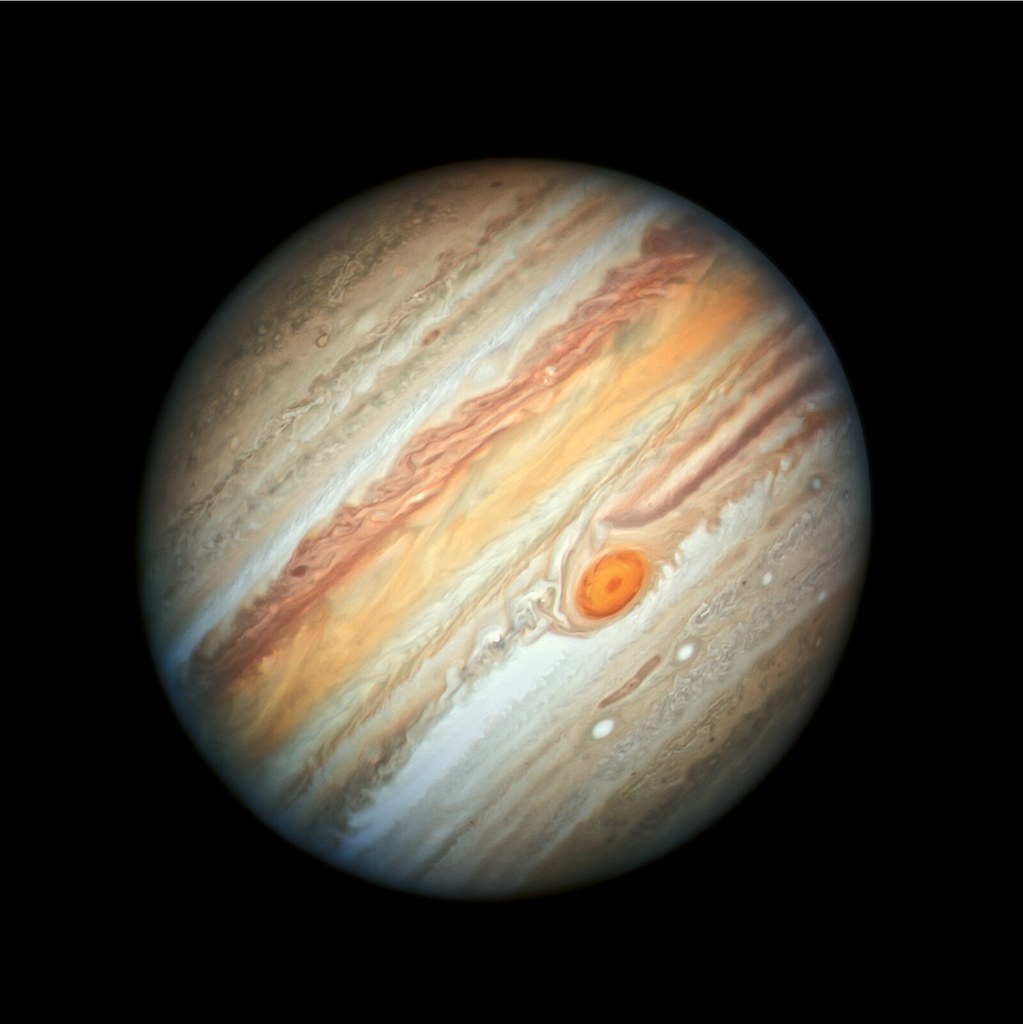
ESA Jupiter mission has completed its third gravity assist, marking a major milestone in its journey to the gas giant. This accomplishment paves the way for exciting discoveries ahead.
Overview of the ESA Jupiter mission
The ESA Jupiter mission, known as JUICE (JUpiter ICy moons Explorer), aims to explore the gas giant Jupiter and its three largest moons: Ganymede, Callisto, and Europa. This mission is significant as it will provide crucial insights into the potential habitability of these celestial bodies.
Recently, JUICE completed its third gravity assist maneuver, successfully using the gravitational pull of Earth to gain speed and adjust its trajectory toward Jupiter. This critical milestone demonstrates the mission’s progress and the effectiveness of its design.
During its journey, JUICE will perform a series of flybys and observations, allowing scientists to gather data about the moons’ icy surfaces and subsurface oceans. The mission is expected to enhance our understanding of the conditions that may support life beyond Earth.
In summary, the ESA Jupiter mission represents a groundbreaking effort in planetary exploration, paving the way for future discoveries in our solar system.
What is a gravity assist?
A gravity assist, also known as a gravitational slingshot, is a spaceflight maneuver that uses the gravity of a celestial body to alter a spacecraft’s trajectory and speed. This technique allows spacecraft to conserve fuel and gain speed without expending energy. During the ESA Jupiter mission, the spacecraft, JUICE, successfully completed its third gravity assist, demonstrating the effectiveness of this method.
In a gravity assist maneuver, a spacecraft approaches a planet or moon and uses its gravitational pull to accelerate and change direction. This is particularly advantageous for missions traveling to distant destinations, as it enables them to reach their objectives more efficiently. The ESA Jupiter mission has utilized this technique multiple times, allowing JUICE to gather valuable data on its journey to the gas giant.
The successful execution of gravity assists is vital for interplanetary missions, enhancing the capabilities of modern space exploration.
Significance of the third gravity assist
The completion of the third gravity assist is a significant milestone for the ESA Jupiter mission, known as JUICE (JUpiter ICy moons Explorer). This maneuver not only demonstrates the precision and expertise of the mission team but also highlights the effectiveness of gravity assists in interplanetary travel.
The significance of this achievement can be summarized in several key points:
- Energy Efficiency: Gravity assists allow spacecraft to gain speed without using additional fuel, making long-distance missions more feasible.
- Trajectory Optimization: Each assist helps refine the spacecraft’s path, ensuring it reaches its target with high accuracy.
- Scientific Data Collection: The mission can gather critical data about the gravitational fields of the planets encountered, enhancing our understanding of their atmospheres and orbits.
With the successful completion of this maneuver, the ESA Jupiter mission is well on its way to achieving its scientific goals, paving the way for groundbreaking discoveries about Jupiter and its moons.
Future goals of the mission
The ESA Jupiter mission, known as JUICE (Jupiter Icy Moons Explorer), has ambitious future goals following its successful third gravity assist. As the spacecraft continues its journey toward the gas giant, scientists are eager to explore the intriguing environments of Jupiter’s moons, particularly Europa, Ganymede, and Callisto.
Key objectives for the mission include:
- Investigating habitability: JUICE aims to assess the potential for life in the subsurface oceans of Europa and Ganymede.
- Studying the magnetosphere: The mission will provide insights into Jupiter’s magnetic field and how it interacts with its moons.
- Understanding moon formation: Researchers will explore the geological and atmospheric processes that shaped these celestial bodies.
Through these objectives, the ESA Jupiter mission hopes to contribute significantly to our understanding of the solar system and the potential for life beyond Earth.
Impact on space exploration
The ESA Jupiter mission has marked a significant milestone in the realm of space exploration with its successful completion of the third gravity assist. This achievement not only demonstrates the precision of current space navigation techniques but also enhances our understanding of the outer solar system. The mission, which aims to study Jupiter’s moons and their potential for hosting life, will benefit from the data collected during this gravity assist maneuver.
As the spacecraft utilizes the gravitational pull of Earth, it gains speed and adjusts its trajectory, allowing it to reach its destination more efficiently. This method underscores the importance of innovative engineering and strategic planning in space missions. The success of this maneuver reaffirms the viability of using gravity assists in future explorations, paving the way for more ambitious projects beyond our immediate cosmic neighborhood.
With every successful assist, the ESA Jupiter mission brings us one step closer to unraveling the mysteries of one of the solar system’s most intriguing gas giants.
By NASA Goddard Photo and Video via Openverse